
Choosing the Ideal Turf for Your Dog
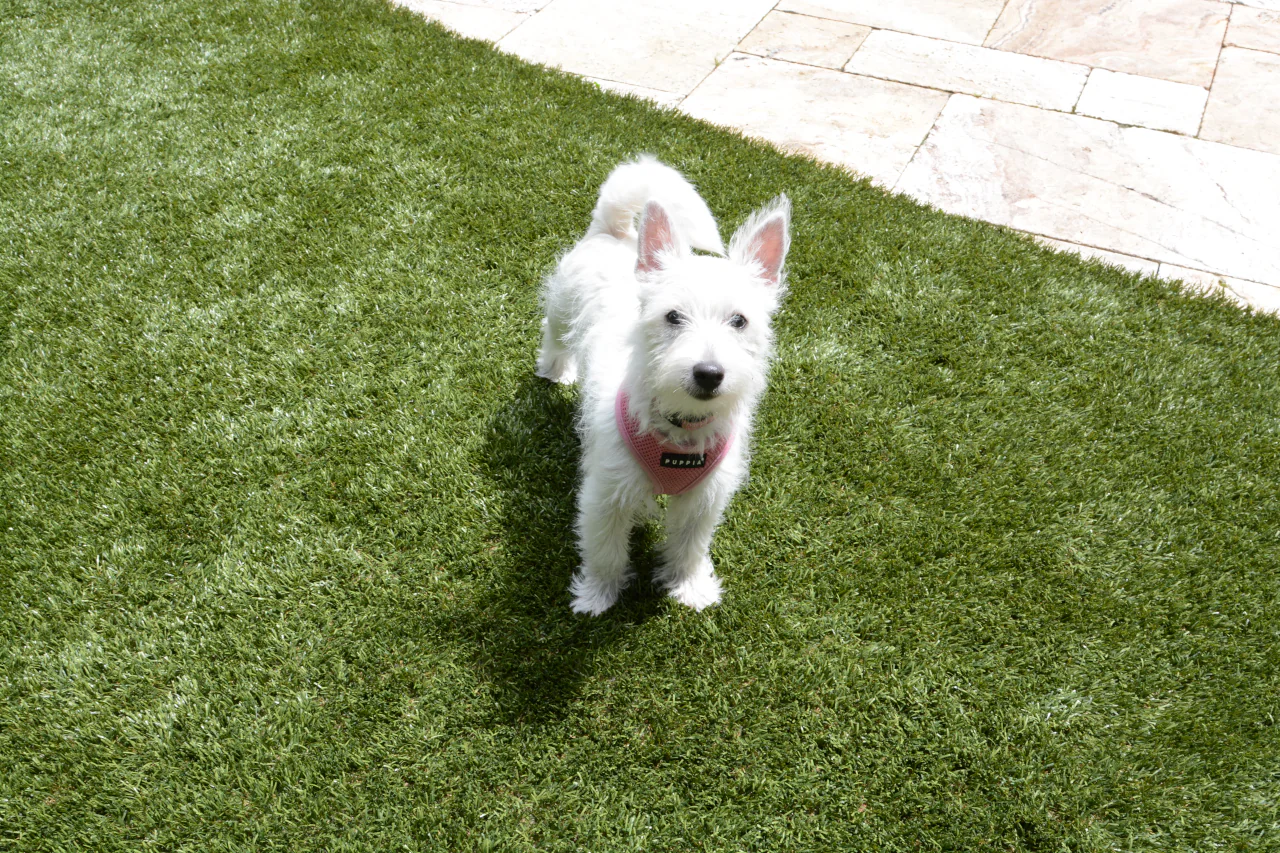
“I dig. Therefore, I exist.” — Your Dog
Q: My dog is basically a fur tornado. Will artificial grass hold up?
A: Yes… but only if you choose a turf system actually made for dogs. Here’s what matters: artificial turf for dogs isn’t the same stuff you see on mini golf courses. We’re talking about dense turf fibers that resist separating, durable backing layers that stays put, and a drainage base that moves liquids quickly.
What does that mean for your chaos machine? The surface rebounds after sudden sprints, stands strong when a big, energetic dog comes barreling across it, and — best of all — prevents your yard from turning into that muddy disaster zone you’re tired of managing.
“I pee where I please.” — Also Your Dog
Q: Does fake grass for dogs handle all that… enthusiasm
A: It can. But you need the correct system. Quality pet turf has a built-in drainage system (not just cheap perforations in the fabric—actual engineered drainage). These products often have antimicrobial layers to control odor buildup, which is a game-changer if you’ve got a pack of pets or a compact backyard.
When artificial turf installation is handled correctly, urine drains through from the grass fibers pretty much immediately. Reduced odor, less bacteria buildup, less “why does my entire backyard smell like a kennel” panic when guests come over. Your dog keeps playing, and you get to stop worrying about bathroom habits.
“I’m a digging enthusiast. Can you stop me?”
Q: Can artificial grass prevent digging disasters?
A: Realistically—no surface can totally defeat a persistent digger. If your pet is convinced there’s something exciting under that area of yard, they’re not giving up easily. But a correctly installed layered turf system makes it far less likely to dig through.
We’re talking about a compacted base, secured edges, and extra protection bariers along the edges. Combine that with some enrichment toys and maybe a approved digging area, and you’ll see less damage in your yard. Is it perfect? No system is perfect. Is it an improvement? Without question.
“How do you keep this place from smelling like… well, me?”
Q: How hard is pet turf maintenance?
A: Less than expected. Regular waste removal is essential (just like natural lawns), and spraying the turf surface every few days keeps things odor-free. For high-use areas—or if you’ve got a dog who always uses one spot—an turf deodorizer helps a lot.
From time to time, brushing the turf helps keep the fibers standing upright and gentle on paws. Think of it like fluffing a pillow for your active dog. It’s not a huge time commitment, especially compared to reseeding bare patches or cleaning muddy floors.
“I need more space. Big dogs, remember?”
Q: Do I need professional artificial turf installation?
A: For big active dogs, yes. Professionals make sure the base is stable, drainage is right, borders stay secure, and infill suits pets. This helps prevent uneven areas, smell issues, and digging shortcuts — basically, more peace of mind, more play room for your pet.
When it’s done right, you avoid sagging spots and those sneaky gaps where a motivated pup can get started. DIY can work for light-use zones, but for dogs who treat the yard like their personal Olympic training facility? Avoid the frustration and let someone who knows what they’re doing handle it.